



When an insurance provider finally processes a claim and issues a payment, healthcare administrators often breathe a sigh of relief, assuming the billing cycle is winding down. However, the financial journey rarely ends there.
Insurance coverage rarely covers 100% of a medical bill. Deductibles, copays, and coinsurance leave an out-of-pocket balance the patient must pay directly.
After the insurer pays, the remaining patient balance may seem small compared with the original claim—but unresolved self-pay balances can still go to collections. As of June 2023, more than 15 million Americans still had medical collections on their credit reports, representing approximately $49.2 billion in medical collections.
When providers leave these balances unmanaged, they eventually face a decision: continue internal follow-up, send the account to bad-debt collections, or resolve it earlier through structured early-out collection services. Early-out outreach gives providers a way to address self-pay balances while the visit is still recent and the conversation can remain service-oriented.
What Is Early-Out Collection Services?
Early-out collection services represent a proactive, customer-service-driven approach to patient billing. Instead of waiting until an account is considered delinquent and written off, early-out teams step in immediately after insurance adjudication.
As an extension of your in-house billing office, these specialists contact patients by phone, email, or through digital portals while the medical experience is still fresh. Their primary goal is financial counseling: helping patients understand their statements, setting up manageable payment plans, and assisting with financial assistance options.
Early-out programs may also include insurance discovery. If coverage was missed or a patient may qualify for retroactive eligibility, the team can identify the opportunity before the balance is treated as final self-pay responsibility.
Early-Out vs. Bad-Debt Collections: Key Operational Differences
Understanding the structural distinction between early-out providers and bad-debt collection agencies helps healthcare leaders build a broader, more effective revenue cycle strategy.
| Operational Focus | Early-Out Collections | Bad-Debt Collections |
| Timing | Beginning after insurance adjudication and continuing through the provider’s pre-placement period. | After the provider’s internal follow-up and placement criteria have been met. |
| Primary Goal | Resolve the patient balance, identify payment or assistance options, and preserve the provider relationship. | Recover balances that earlier efforts did not resolve. |
| Communication Style | Empathetic, supportive, and customer-service-oriented. | Formal, structured, and recovery-focused. |
| Impact on Patient Perception | Preserves the patient-provider relationship through service-focused engagement. | Shifts to a formal collection posture, which can alter how patients view the provider. |
The Strategic Role of Bad-Debt Collections
Bad-debt collections serve as a necessary later-stage recovery mechanism within the broader revenue cycle. However, once an account moves beyond early-out, the conversation typically becomes more formal and focused on recovery. That shift can affect how patients perceive the provider, so the provider should always decide when to place an account.
Retaining control over when and how an account transitions to bad-debt status ensures the organization fully evaluates patient relationship nuances, special financial hardship cases, and outstanding insurance questions before formal recovery steps begin.
Supporting 501(r) Financial Assistance Workflows
For nonprofit hospitals, early outreach can also support financial assistance workflows. Under Internal Revenue Code Section 501(r), hospital organizations must maintain a financial assistance policy and make reasonable efforts to determine whether a patient is eligible for assistance before undertaking certain extraordinary collection actions.
Routing likely-eligible patients early helps support the provider’s financial assistance process by creating an opportunity to evaluate charity care and other assistance options before an account advances further.
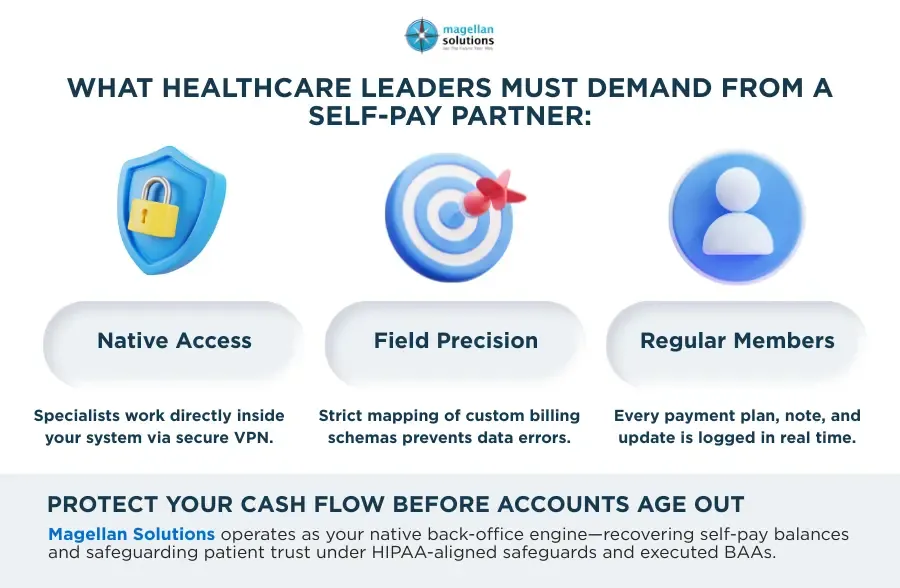
Ready to Evaluate Your Self-Pay Outreach Strategy?
Navigating post-insurance balances shouldn’t compromise your revenue cycle efficiency or patient goodwill. Magellan Solutions partners with healthcare providers to deliver a seamless, first-party early-out model that aligns with your clinical values and financial policies.
Speak with our healthcare revenue cycle specialists today to discuss a tailored self-pay resolution strategy for your facility.
Frequently Asked Questions About Early-Out Collections
1. What is the main difference between early-out collections and bad debt?
Early-out services extend your customer service team by stepping in immediately after insurance adjudication to help patients resolve balances through financial counseling, insurance discovery, and payment plans. Bad-debt collections take over accounts that have met the provider’s placement criteria, focusing on later-stage recovery.
2. How do early-out services support patient retention?
By focusing on education, empathetic communication, and flexible payment options rather than formal recovery tactics, early-out teams help patients navigate their out-of-pocket responsibilities while maintaining a positive relationship with the healthcare provider.
3. When should a healthcare facility deploy an early-out strategy?
A healthcare facility typically deploys an early-out strategy immediately after insurance adjudication—as soon as the remaining patient responsibility is established—to address balances while the service experience is recent.
4. How do early-out partners maintain HIPAA compliance?
Professional early-out partners operate under HIPAA-aligned safeguards, utilizing encrypted systems, secure remote access, and executed Business Associate Agreements (BAAs) with covered entities to protect sensitive patient health information.
5. Can early-out teams assist with 501(r) compliance and financial assistance?
Yes. Trained early-out specialists help identify candidates for charity care and guide patients through financial assistance applications, supporting the provider’s compliance with Section 501(r) requirements prior to any formal collection action.
Key Takeaways
- Engage Early: Addressing balances immediately after insurance adjudication prevents manageable self-pay accounts from aging into late-stage collections.
- Leverage Insurance Discovery: Identifying missed coverage or retroactive eligibility resolves balances before treating them as final self-pay responsibilities.
- Support 501(r) Governance: Early outreach ensures eligible patients are guided into financial assistance programs prior to extraordinary collection actions.
- Maintain Placement Control: Keeping the provider in control of the bad-debt placement decision protects patient relationships and aligns recovery efforts with organizational policies.