



Dispatch operations rarely fall apart due to a single major problem. More often, it’s a series of small breakdowns—missed updates, delayed responses, unclear schedules, or information that never reaches the right person at the right time.
That’s why many organizations now invest in logistics dispatch support alongside stronger operational processes. As delivery networks become more demanding, businesses need more than just drivers and dispatchers. They need connected systems that keep communication, scheduling, and execution aligned.
This is where integrated logistic support becomes valuable. It helps bring different operational functions together, making dispatch activities easier to manage, track, and scale.
Why Dispatch Teams Struggle As Operations Grow
Managing dispatch becomes significantly more challenging as businesses handle more deliveries, routes, and customer expectations. What worked for ten daily deliveries often breaks down at one hundred.
Common challenges include:
- Delayed driver updates
- Scheduling conflicts
- Communication gaps
- Limited shipment visibility
- Growing administrative workloads
Individually, these issues seem manageable. Together, they can create bottlenecks that slow down entire operations.
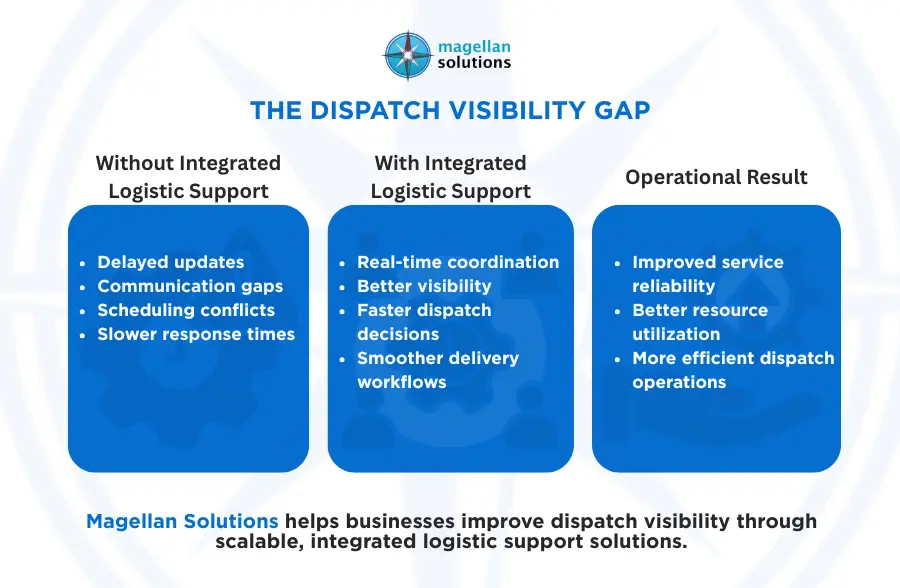
Integrated logistic support helps reduce these friction points by creating a more coordinated flow of information between teams, systems, and field personnel.
The Problem Is Often Coordination, Not Capacity
Many businesses assume dispatch problems stem from a lack of resources. In reality, the issue is often coordination.
A dispatcher may have the right people and vehicles available but still struggle because information is scattered across emails, spreadsheets, phone calls, and disconnected systems.
Integrated logistic support focuses on connecting these moving parts into a more organized framework.
That includes:
- Dispatch coordination
- Driver communication
- Route scheduling
- Operational tracking
- Workflow management
When information moves smoothly, operations usually follow.
Why Visibility Drives Better Dispatch Decisions
Dispatch teams make dozens of decisions every day. Those decisions depend on accurate information.
Without visibility, small issues become difficult to identify until they affect deliveries or customer service.
Integrated logistic support improves visibility by helping businesses create a clearer view of operational activity.
The benefits often include:
- Faster response times
- Better route adjustments
- Improved communication accuracy
- Fewer scheduling conflicts
- Stronger operational control
When dispatch teams can see what’s happening in real time, they’re better positioned to solve problems before they become disruptions.
The Demand For Better Logistics Coordination Continues To Grow
Modern logistics operations generate a constant stream of information. Delivery statuses, route changes, customer requests, service updates, and driver communications all require attention.
According to research, organizations that improve supply chain visibility and digital coordination capabilities are better equipped to increase efficiency and responsiveness across complex logistics networks.
That matters because logistics today isn’t simply about moving goods. It’s about managing information just as effectively.
This is one reason businesses continue investing in integrated logistics support as part of broader operational improvement initiatives.
Why Outsourcing Dispatch Support Makes Sense
Not every organization has the resources to build a large internal dispatch support team. As operations expand, maintaining consistent communication and coordination becomes more difficult. Hiring additional staff can help, but it also increases management complexity and operational costs.
This is why many businesses choose to outsource parts of their dispatch support function.
Integrated logistic support provided through outsourced teams can help organizations:
- Extend operational coverage
- Improve communication consistency
- Reduce administrative pressure
- Scale more efficiently
- Maintain service quality during growth periods
Rather than constantly adding internal resources, businesses gain access to specialized support that grows alongside operational demand.
Small Improvements Create Big Operational Gains
Dispatch efficiency doesn’t always come from major system overhauls. Sometimes the biggest improvements come from fixing everyday operational friction.
When communication becomes faster, and information is easier to access, dispatch teams spend less time chasing updates and more time proactively managing operations.
Integrated logistic support helps strengthen:
- Workflow consistency
- Information accuracy
- Team coordination
- Dispatch responsiveness
- Operational efficiency
Over time, these improvements compound, creating a more resilient logistics operation.
Building A Dispatch Operation That Can Scale
More customers, more deliveries, and larger service areas all place additional pressure on dispatch teams. Without structured processes, that complexity becomes difficult to manage efficiently.
Integrated logistic support helps organizations build a stronger operational foundation by improving how information flows across the business.
This creates:
- Better communication
- Faster decision-making
- Reduced operational friction
- Greater flexibility
- Stronger dispatch performance
For growing organizations, scalability often starts with coordination.
Why Integrated Logistic Support Matters More Than Ever
Successful dispatch operations rely on more than vehicles and schedules. They depend on visibility, communication, and coordination.
Integrated logistic support helps businesses bring these elements together, creating smoother workflows and stronger operational control across logistics activities.
Magellan Solutions provides scalable support solutions designed to help businesses improve dispatch coordination, streamline communication, and strengthen operational visibility.
If your organization is looking to improve dispatch efficiency and support long-term growth, speak with our specialists to explore tailored integrated logistic support solutions that fit your operational needs.