



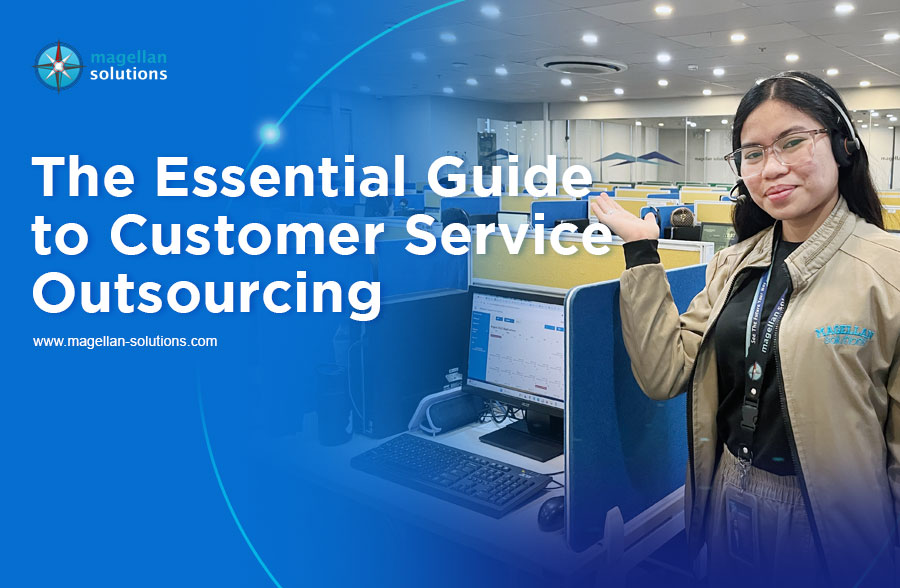
After a series of poor service experiences, many customers are willing to switch to a competitor. Customer expectations continue to rise, making the quality of support one of the most important factors influencing loyalty and long-term business success. This is why customer service outsourcing has become a strategic solution for organizations looking to improve customer experiences while managing costs effectively.
Industry analysts project continued growth in the global business process outsourcing market as companies seek specialized expertise, advanced technologies, and scalable support solutions. This guide explores how customer service outsourcing works, its advantages and challenges, and how businesses can build successful partnerships that support sustainable growth.
This article was originally published in February 2, 2024 and updated in 2026 to reflect current outsourcing trends, AI-driven support technologies, and evolving customer experience expectations.
Understanding Customer Service Outsourcing
Customer service outsourcing refers to partnering with a third-party provider to manage customer interactions across multiple communication channels. Instead of building and maintaining large internal support teams, businesses leverage external specialists who already possess the infrastructure, technology, workforce, and expertise needed to deliver exceptional customer experiences.
Outsourcing providers typically handle customer interactions through phone support, email, chat, social media, help desk systems, and other digital channels.
According to McKinsey & Company research on outsourcing strategies, organizations that strategically outsource customer-facing operations can improve efficiency while maintaining strong customer outcomes.
Why Customer Service Outsourcing Continues to Grow
Businesses across industries increasingly rely on customer service outsourcing because customer support has become more complex. Customers expect quick responses, personalized interactions, and seamless experiences regardless of the communication channel they choose.
Outsourcing allows organizations to access trained professionals, modern technologies, and flexible staffing models without the costs associated with building large in-house teams.
Many companies complement their voice support operations with specialized non-voice customer service solutions that include email support, live chat, ticket management, and social media customer care.
Types of Customer Service Outsourcing
Voice-Based Customer Service
Voice support remains a critical component of customer service outsourcing. Contact center agents handle customer inquiries, technical support requests, order processing, billing concerns, and complaint resolution through inbound and outbound calls.
Businesses operating in industries such as healthcare, retail, financial services, and telecommunications often require dedicated voice support teams to maintain high service levels.
Non-Voice Customer Service
Digital customer support channels continue to expand rapidly. Non-voice services include email support, live chat, social media management, online ticketing systems, and self-service support resources.
Organizations often integrate outsourced support with specialized help desk services to improve issue resolution and streamline customer interactions.
Key Benefits of Outsourcing Customer Service
Lower Operating Costs
One of the primary reasons businesses pursue customer service outsourcing is cost efficiency. Recruiting, training, managing, and retaining customer service staff requires significant investment. Outsourcing converts many fixed operational expenses into more flexible service costs.
Access to Specialized Talent
Established outsourcing providers invest heavily in workforce development, quality assurance, and customer experience training. Businesses gain access to skilled customer service professionals without lengthy recruitment processes.
Improved Customer Experience
Customer expectations continue to evolve. Research from the Pew Research Center’s study on technology and human interactions highlights the growing role of technology and human expertise in delivering effective customer experiences.
By combining trained support professionals with modern service technologies, providers help organizations improve responsiveness, consistency, and customer satisfaction.
Scalability and Flexibility
Customer support demand often fluctuates throughout the year. Outsourcing enables businesses to scale operations quickly during seasonal spikes, product launches, or unexpected growth periods without major staffing challenges.
Round-the-Clock Support
Many organizations now offer 24/7 customer assistance. Outsourcing makes continuous coverage achievable without requiring internal teams to work around the clock.
Businesses seeking dedicated support care capabilities often leverage professional customer outsourcing services to maintain service availability across multiple time zones.
Challenges of Outsourcing
While customer service outsourcing offers substantial benefits, businesses should also address potential challenges.
Communication and Cultural Differences
Outsourcing partnerships may involve teams operating across different countries, languages, and time zones. Clear communication processes, regular meetings, and comprehensive training help minimize misunderstandings and maintain service quality.
Quality Control
Maintaining consistent customer experiences requires ongoing performance monitoring. Successful outsourcing partnerships establish measurable service standards, quality assurance programs, and regular reporting structures.
Data Security and Compliance
Protecting customer information remains a top priority. Businesses should partner with providers that maintain strong security protocols, compliance certifications, and established privacy practices.
The Growing Role of AI in Customer Service Outsourcing
Artificial intelligence is reshaping outsourcing by helping organizations improve efficiency and responsiveness.
Modern outsource solution providers increasingly utilize AI-powered customer service solutions to support customer interactions through intelligent routing, automated responses, predictive analytics, and workflow optimization.
AI technologies help support teams manage high volumes of inquiries while allowing human agents to focus on complex customer concerns that require empathy and critical thinking.
Choosing the Right Customer Service Outsourcing Partner
Selecting an outsourcing provider requires careful evaluation of several factors, including industry expertise, technology capabilities, security standards, scalability, and cultural alignment.
Organizations should look for providers with proven experience, transparent processes, and a strong commitment to customer satisfaction.
Businesses evaluating outsourcing destinations may also find value in understanding the key characteristics of BPO companies in the Philippines, one of the world’s leading outsourcing hubs.
Customer Service Outsourcing Best Practices
Successful outsourcing relationships are built on collaboration, transparency, and continuous improvement. Organizations should establish clear service objectives, maintain open communication channels, monitor performance regularly, and invest in ongoing training initiatives.
Data-driven decision-making also plays a critical role. Performance metrics such as customer satisfaction scores, response times, first-contact resolution rates, and quality assurance results provide valuable insights for optimization.
Frequently Asked Questions About Customer Service Outsourcing
What is customer service outsourcing?
Customer service outsourcing is the practice of hiring an external provider to manage customer support activities across channels such as phone, email, chat, social media, and help desk systems.
Why do companies outsource customer service?
Businesses outsource customer service to reduce costs, improve scalability, access specialized expertise, enhance customer experiences, and maintain operational flexibility.
Is outsourcing customer service suitable for small businesses?
Yes. Small and medium-sized businesses often benefit from outsourcing because it provides access to experienced support teams without significant infrastructure investments.
How does AI support customer service outsourcing?
AI helps automate routine inquiries, improve response times, enhance analytics, optimize workflows, and support agents in delivering faster and more accurate customer service.
What industries commonly outsource customer service?
Retail, healthcare, technology, financial services, telecommunications, travel, and e-commerce organizations frequently outsource customer support operations.
Transform Your Customer Experience with Magellan Solutions
Outsourcing has evolved into a powerful business strategy that helps organizations improve efficiency, strengthen customer relationships, and support long-term growth.
At Magellan Solutions, we provide customized customer support solutions designed to meet the unique needs of businesses across industries. Our experienced teams combine human expertise, advanced technologies, and proven service methodologies to deliver exceptional customer experiences through voice, non-voice, help desk, and AI-powered support channels.
Whether your goal is to reduce operational costs, improve customer satisfaction, expand service availability, or scale support operations, Magellan Solutions can help you achieve measurable results.
Contact Magellan Solutions today for a free consultation and discover how our outsourcing solutions can elevate your customer experience and support your business growth.