



Looking for an accurate quote for your outsourcing needs?
Schedule a FREE call with our outsourcing expert now and get a precise quotation that meets your requirements. Don't wait - get started today!
Introduction to Dispatch Management in Logistics
dispatch management in logistics sits at the center of modern delivery systems. Logistics companies across the United States and global markets rely on structured dispatch workflows to coordinate drivers, manage routes, and meet strict delivery windows.
Today’s environment demands more than manual coordination. AI-driven systems now support dispatch operations management by processing real-time data, predicting delays, and improving decision-making. This shift allows logistics teams to act faster, reduce errors, and maintain consistent delivery performance.
Clear alignment between planning, execution, and communication defines success. When dispatch systems operate with precision, businesses see measurable gains in delivery accuracy, fuel efficiency, and customer satisfaction.
What is the Role of Dispatcher in Logistics?
A dispatcher manages the movement of goods from origin to destination with accuracy and timing in mind. Within dispatch management in logistics, this role connects drivers, warehouse teams, and customers through a single coordination point.
Core responsibilities include:
- Assigning delivery routes based on location, urgency, and capacity
- Monitoring driver progress using GPS tracking systems
- Communicating updates and resolving delivery issues in real time
- Adjusting schedules when disruptions occur
- Ensuring compliance with delivery timelines and service agreements
Dispatchers rely on AI-assisted tools to make faster decisions. For example, predictive routing systems can flag traffic congestion before it impacts delivery schedules. That insight allows dispatchers to reroute drivers early, avoiding delays instead of reacting to them.
In practical terms, dispatchers keep operations moving. They reduce downtime, prevent missed deliveries, and maintain operational flow across the supply chain.
How Dispatch Management in Logistics Improves Real-Time Route Coordination
Real-time coordination defines how efficiently goods move across regions. dispatch management in logistics uses live data to ensure that every route stays aligned with delivery targets.
Key outcomes of real-time coordination:
- Faster route adjustments
Dispatch systems analyze traffic patterns, weather conditions, and road closures. Routes update instantly, keeping drivers on the most efficient path. - Reduced idle time
Vehicles spend less time waiting or rerouting. This directly lowers fuel consumption and operational costs. - Improved delivery accuracy
Real-time updates help drivers meet delivery windows more consistently. - Better communication flow
Dispatchers, drivers, and customers receive synchronized updates, reducing confusion and missed instructions.
AI plays a critical role here. Machine learning models process historical delivery data and combine it with live inputs. The result is a system that continuously improves route planning over time.
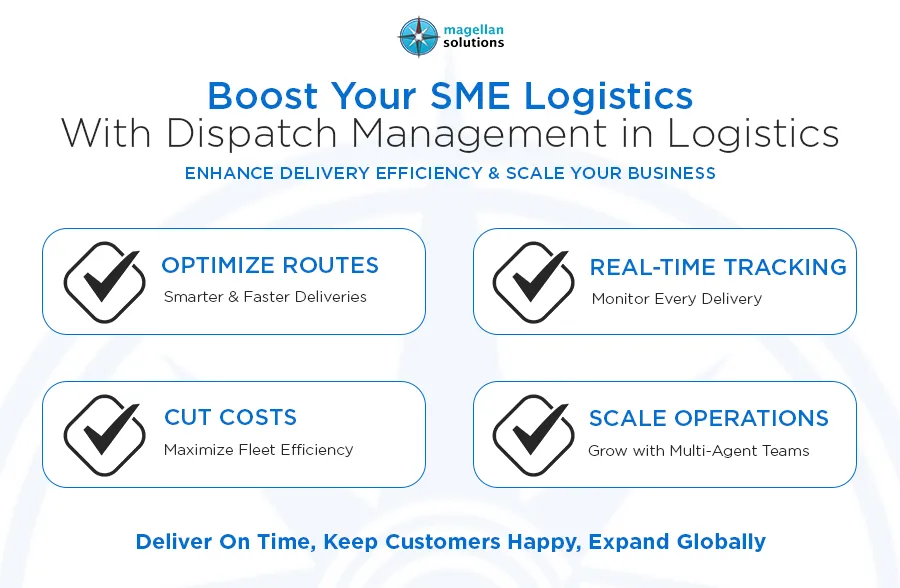
Core Components of Dispatch Management in Logistics
Breaking down dispatch management in logistics into its main components helps clarify how the system works in practice.
Route Planning and Optimization
Route planning determines how deliveries move from point A to point B. AI-powered tools evaluate:
- Distance and travel time
- Traffic density and congestion trends
- Delivery deadlines and priority levels
This structured approach improves route efficiency and reduces unnecessary mileage.
Driver Coordination
Driver coordination ensures that instructions are clear and timely. Dispatchers provide:
- Route details and delivery sequences
- Real-time updates for changes or delays
- Emergency support when issues arise
Mobile dispatch apps make communication immediate and trackable.
Fleet Monitoring
Fleet monitoring gives dispatchers full visibility over operations. Key data points include:
- Vehicle location
- Speed and movement patterns
- Delivery progress
This visibility allows quick adjustments and supports better decision-making.
Load and Schedule Management
Efficient load distribution ensures that vehicles operate at optimal capacity. Scheduling aligns deliveries with customer expectations while maintaining workflow balance across the network.
Measurable Benefits of Dispatch Management in Logistics for U.S. Businesses
Companies invest in dispatch management in logistics because it delivers clear, measurable outcomes.
Performance comparison
| Area | Without Structured Dispatch | With Dispatch Management in Logistics |
|---|---|---|
| Delivery accuracy | Inconsistent | High consistency |
| Route efficiency | Reactive | Optimized in real time |
| Fuel usage | Higher | Reduced through optimization |
| Customer visibility | Limited updates | Real-time tracking |
| Operational scalability | Restricted | Flexible and scalable |
Key benefits explained
- Higher delivery success rates
Accurate routing reduces missed or delayed shipments. - Lower operational costs
Optimized routes reduce fuel consumption and overtime expenses. - Stronger customer trust
Real-time updates provide transparency, which improves satisfaction. - Scalable operations
Businesses handle increased delivery volumes without losing control.
These benefits directly support growth in competitive logistics markets.
The Role of AI in Dispatch Operations Management
AI strengthens dispatch management in logistics by adding predictive and adaptive capabilities. Instead of relying on static plans, AI systems respond dynamically to changing conditions.
How AI improves dispatch processes:
- Predictive analytics
Forecasts delays based on historical and real-time data - Dynamic routing
Continuously updates delivery routes for efficiency - Demand forecasting
Anticipates peak periods and adjusts resource allocation - Automation of repetitive tasks
Reduces manual workload for dispatch teams
For example, an AI-driven dispatch system can identify patterns in delivery delays across specific routes. It can then recommend alternative routes or schedule adjustments to improve performance over time.
This level of intelligence transforms dispatch operations management into a proactive system rather than a reactive one.
Why Outsourcing Dispatch Management in Logistics Supports Growth
Outsourcing dispatch management in logistics provides access to specialized teams and advanced tools without requiring heavy internal investment.
Advantages of outsourcing:
- Access to trained dispatch professionals
- Continuous operations through multi-agent coverage
- Scalable support during peak demand periods
- Integration with advanced dispatch technologies
A multi-agent, multi-seated support model ensures that logistics operations run continuously. This structure improves response times and maintains consistent service levels across different time zones.
Outsourcing also allows internal teams to focus on core business areas such as client relationships and strategic planning.
Practical Steps to Strengthen Dispatch Management in Logistics
Improving dispatch systems does not require a complete overhaul. Focused steps can deliver immediate results.
Step-by-step approach:
- Assess current dispatch workflows
Identify delays, communication gaps, and inefficiencies - Implement real-time tracking tools
Use GPS and fleet monitoring systems for visibility - Adopt AI-powered routing solutions
Improve route accuracy and adaptability - Standardize communication protocols
Ensure consistent updates between dispatchers and drivers - Consider outsourcing for scalability
Expand capacity without increasing internal overhead
Each step builds toward a more controlled and efficient dispatch environment.
Strengthen Logistics Performance with Expert Dispatch Support
dispatch management in logistics drives real operational results when executed with precision and supported by the right technology. Businesses that invest in structured dispatch systems gain stronger control over routes, better coordination across teams, and improved delivery outcomes.
Magellan Solutions supports logistics providers with professional dispatch services tailored for global SMEs targeting the United States, APAC, Australia, and New Zealand. Their multi-agent, multi-seated operational model ensures consistent coverage, real-time coordination, and scalable support for growing logistics demands.
Explore how Magellan Solutions can help refine your dispatch operations management and improve delivery performance across every route. Visit Magellan-Solutions.com to learn more and connect with a team that understands the pace and complexity of modern logistics.