



Cybersecurity organizations across the Asia-Pacific region are intensifying their focus on operational efficiency, data protection, and threat intelligence accuracy. With massive volumes of data coming from security logs, user behavior analytics, and incident reports, many companies are now exploring call center services for data management as part of a broader strategy to improve workflows. This article discusses why outsourcing data management is becoming a strategic necessity in the cybersecurity sector, especially for teams that require speed, precision, and multi-agent collaboration. It also explains how organizations can leverage this model to strengthen performance and security resilience.
This article will guide cybersecurity leaders through the fundamentals of outsourcing data management, the benefits it brings, the challenges it solves, and the strategic best practices to maximize success. By the end, readers will understand how this approach supports their operational and commercial goals in a rapidly evolving threat landscape.
What is Outsourcing Data Management?
Outsourcing data management refers to delegating data related processes to a specialized external provider. These processes include data entry, data cleansing, database maintenance, analytics support, document handling, ticket management, and structured reporting.
For cybersecurity companies, outsourcing means assigning large scale, repetitive, or time sensitive data tasks to trained teams who can execute them with accuracy and round the clock availability. This approach has become essential as the volume of digital information grows, creating a need for reliable partners that ensure consistency, compliance, and operational speed. Outsourced teams use secure workflows, advanced tooling, and defined protocols to process, validate, and organize data in ways that strengthen overall cybersecurity operations.
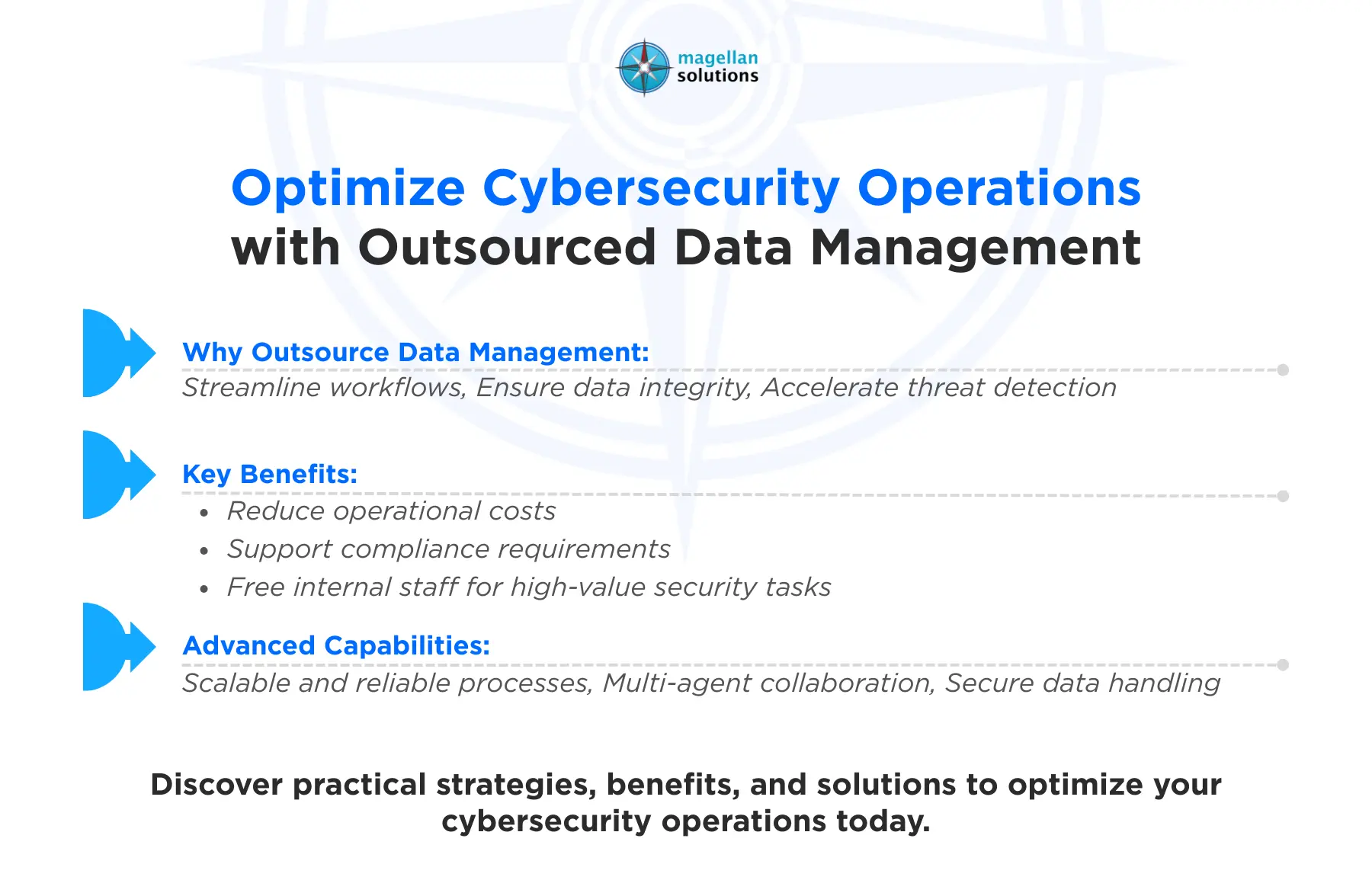
Key Benefits of Outsourcing Data Management
Cybersecurity organizations in Asia-Pacific can achieve significant gains with outsourced support. Below are major advantages that improve workflows and operational efficiency.
1. Enhanced Accuracy and Data Integrity
Outsourced data teams use strict validation protocols to maintain clean, reliable, and structured data. For cybersecurity companies, this translates into more accurate incident tracking, stronger analytics, and better decision making. A clean database helps threat analysts identify patterns faster.
2. Improved Operational Efficiency
With external specialists handling data workflows, cybersecurity teams can focus on advanced threat modeling, vulnerability assessments, and investigation tasks. Outsourcing helps eliminate repetitive work that consumes internal manpower. Productivity increases and teams deliver results more consistently.
3. Faster Response and Turnaround Time
Many Asia-Pacific cybersecurity companies manage high alert volumes. Outsourcing ensures real time or continuous data processing supported by multi agent teams. This reduces backlogs, improves SLA adherence, and keeps threat detection pipelines updated with fresh data.
4. Lower Costs with Scalable Resources
Instead of hiring, training, and maintaining large internal teams for data tasks, outsourcing offers flexible staffing that scales based on demand. Businesses only pay for the services they use. This reduces overhead costs and eliminates the financial risk associated with local hiring shortages.
5. Strengthened Compliance and Security Alignment
Reputable outsourcing providers implement strict standards for confidentiality, secure data handling, and audit readiness. This helps cybersecurity companies maintain compliance with regional regulations such as APAC privacy frameworks and international standards.
6. Better Support for Analytics and Automation
Outsourced teams provide structured data processing that enhances the performance of threat intelligence platforms and security automation tools. Clean and organized datasets allow cybersecurity technologies to perform at higher levels.
Common Challenges and Solutions
Cybersecurity companies often encounter data related issues that affect efficiency and accuracy. Outsourcing offers strategic solutions to these common pain points.
Challenge: Growing Data Volume
Threat logs, compliance reports, and behavioral analytics generate massive datasets that overwhelm internal teams.
Solution: Outsourcing provides an elastic workforce able to process data continuously and maintain updated records without delays.
Challenge: Inconsistent Data Quality
Manual errors, incomplete entries, and mismatched formats result in unreliable information.
Solution: Dedicated specialists use validation checks, structured formats, and multistage review processes to maintain quality and consistency.
Challenge: Limited Internal Staffing
Cybersecurity companies in Asia-Pacific often struggle with talent shortages.
Solution: Outsourcing gives immediate access to trained support teams who can handle data related tasks without recruitment delays.
Challenge: Slow Incident Response
Delayed data processing affects threat detection and incident management.
Solution: Outsourced teams ensure real time updates, rapid ticket handling, and continuous workflow support that improves response time.
Challenge: Compliance Pressure
Organizations must protect data privacy and maintain regulatory compliance.
Solution: Outsourcing providers follow strict data handling policies and support secure documentation for audits or compliance checks.
Best Practices and Strategies for Successful Outsourcing
Success in outsourcing data management depends on clear planning and strategic execution. Cybersecurity companies can follow these best practices to maximize results.
1. Define Clear Objectives
Identify priorities such as faster data turnaround, reduced manual work, cleaner databases, or improved compliance reporting.
2. Choose Providers with Cybersecurity Expertise
Select outsourcing partners that understand cybersecurity workflows, log handling, and sensitive data management.
3. Establish Detailed SOPs
Provide structured guidelines for data entry, classification, tagging, and review. This ensures predictable and standardized output quality.
4. Integrate Tools and Access Controls
Use secure platforms for workflow monitoring, task distribution, and controlled system access.
5. Maintain Open Communication
Regular check ins, performance dashboards, and QA cycles help ensure continuous alignment and improvement.
6. Start Small and Scale Gradually
Begin with priority processes then expand once workflows are stable and quality metrics are consistent.
Why Now is the Best Time to Invest in Outsourcing Data Management
Cybersecurity threats in Asia-Pacific have increased significantly in the past five years. As digital environments expand, organizations rely heavily on accurate and timely data to support threat detection, vulnerability tracking, and compliance reporting. With more businesses adopting cloud security, zero trust frameworks, and AI driven threat intelligence, the need for reliable data processing has never been more pressing.
Emerging industry trends show that multi agent workflows, distributed teams, and continuous monitoring will shape the future of cybersecurity operations. Outsourcing supports these developments by providing scalable talent, efficient workflows, and structured data handling that cybersecurity organizations need to keep pace with attackers and regulatory demands.
For Asia-Pacific companies, outsourcing also unlocks competitive advantages such as cost efficiency, operational resilience, and the ability to deploy resources strategically. With the cybersecurity landscape accelerating, now is the ideal moment to build a reliable outsourced data management foundation.
Conclusion
Outsourcing data management supports faster workflows, stronger analytics, and more accurate decision making for cybersecurity companies in Asia-Pacific. It improves data integrity, reduces operational strain, and enables teams to focus on high value security functions. As the demand for real time threat intelligence continues to rise, outsourcing serves as a practical and strategic solution.
Interested in outsourcing data management?
Magellan Solutions is a trusted outsourcing provider that supports global businesses with secure and reliable data management services. With extensive experience in structured workflows, multi agent support, and compliance aligned processes, Magellan Solutions delivers high quality results for organizations seeking efficiency and accuracy in their operations. The company provides customized solutions, trained specialists, and robust data security protocols tailored to the needs of cybersecurity teams.
Visit the official website today to learn more and request your free consultation.