


Ecommerce growth can create a support problem of its own. A customer might ask about an order through Shopify, send a message through a marketplace, then follow up by email when they don’t hear back. Suddenly, one customer conversation is spread across several platforms.
That’s where reliable inbound customer support becomes important. Instead of leaving each channel to a separate workflow, brands can outsource ecommerce customer service to a dedicated team that keeps customer inquiries organized, responsive, and consistent.
The goal isn’t simply to answer more tickets. It’s to make sure customers get the same level of support wherever they choose to reach you.
Customers See One Brand, Not Your Channels
Shoppers don’t think about which platform handles their order. They think about the company they bought from.
A customer might ask a product question through chat, purchase through Shopify, and later email about delivery. Each interaction is different, but the customer expects the same level of service.
When brands outsource ecommerce customer service, one support team can manage these interactions with a consistent approach instead of leaving each platform to a separate workflow.
Shopify Tickets Are Only Part of the Work
A Shopify store can process the transaction, but customers may still need help before and after checkout.
Common questions include:
- Is this product available?
- When will my order arrive?
- Can I change my shipping address?
- How do I return an item?
- When will my refund arrive?
Some requests take seconds to resolve. Others require checking an order, reviewing a policy, or coordinating with another department.
With outsource ecommerce customer service, these everyday conversations can be handled by trained agents while internal teams concentrate on marketing, inventory, product development, and other growth priorities.
Marketplace Messages Need a Consistent Response
Selling through Amazon, eBay, Walmart Marketplace, or other platforms creates another stream of customer conversations. The challenge isn’t simply replying to messages. It’s maintaining the same service standards across every platform.
A buyer shouldn’t receive helpful support through your website but struggle to get an answer through a marketplace. An outsource ecommerce customer service team can monitor marketplace inquiries, answer order questions, and handle common returns or follow-ups across multiple platforms.
When Support Becomes Part of the Buying Experience
Customers don’t want to explain the same problem every time they switch channels. They expect the conversation to carry over with them.
According to research, 66% of consumers will spend more with companies that let them start a conversation on one channel and continue it on another without having to repeat themselves.
For ecommerce brands, connected customer support is more than a service feature. It can influence how customers buy and how much they’re willing to spend.
Choosing to outsource ecommerce customer service gives brands the support coverage to keep those conversations connected across different customer channels.
What Can an Outsourced Team Take Off Your Plate?
Outsourcing doesn’t have to mean handing over the entire customer experience. It can focus on the repetitive support work that takes valuable time away from your core team.
Order Support
Agents can answer delivery questions, check order details, and assist with common order changes.
Product Questions
Customers can get help with product information, availability, and basic purchasing concerns.
Returns and Exchanges
Agents can explain return procedures, clarify policies, and manage common follow-ups.
Marketplace Support
A dedicated team can monitor customer inquiries across different ecommerce platforms and respond in line with your brand guidelines.
Post-Purchase Support
The transaction may be complete, but the customer journey isn’t. Delivery concerns, refunds, warranties, returns, and product questions can still require attention.
This is where outsource ecommerce customer service can give brands additional coverage without adding every support task to the internal workload.
AI Handles the Routine. People Handle the Rest.
AI has a useful role in ecommerce support. Chatbots can answer basic questions. Automated messages can provide order updates. AI can also help categorize incoming requests and route them appropriately.
But a damaged order or unusual refund request isn’t always something a scripted response can solve. Customers sometimes need someone who can understand the situation, make sense of the details, and respond with judgment.
A practical outsource ecommerce customer service model can combine both: automation for repetitive requests and human agents for issues that need a more thoughtful response.
One Support Team, Many Customer Touchpoints
Customers may reach an ecommerce brand through different platforms, but they still expect the same experience.
A shopper shouldn’t get one answer through Shopify and a completely different one through a marketplace. The people handling those conversations need the same information, policies, and brand guidelines.
That’s easier to maintain when outsource ecommerce customer service is managed as one support operation rather than several disconnected workflows.
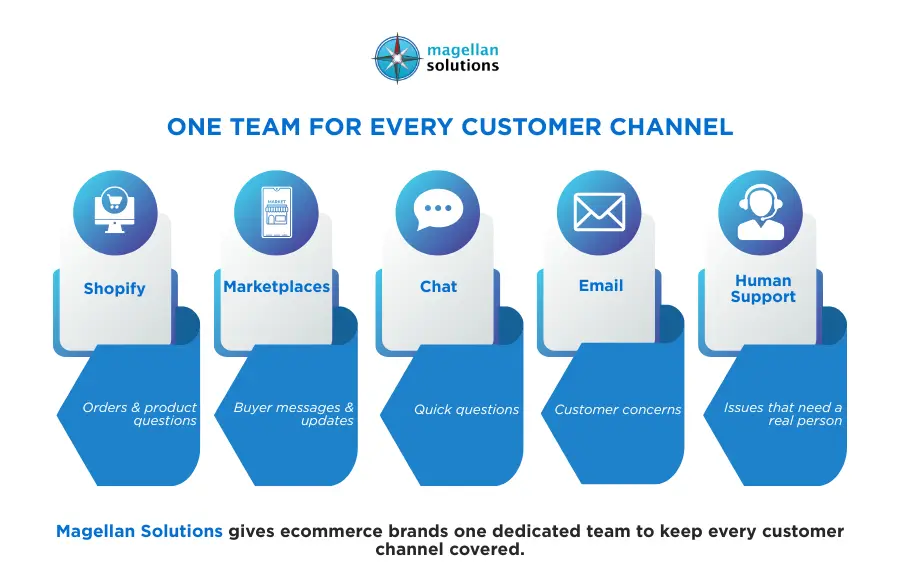
This is the real value of outsource ecommerce customer service. Customers can move between channels without your team having to start from scratch each time.
When Does Outsourcing Make Sense?
You don’t need an outside support team simply because you have an online store. The need usually becomes clearer when customer inquiries start competing with other priorities.
You may be ready to outsource ecommerce customer service when:
- Messages are sitting unanswered
- Your team keeps switching between platforms
- Response times are slipping
- Support takes time away from growth work
- Customer questions are becoming harder to manage
- Sales are growing faster than your support capacity
Adding more tasks to an already stretched team won’t necessarily solve the problem. Additional support coverage can.
Keep Your Internal Team Focused
Customer support is important, but it shouldn’t consume the people responsible for growing the business.
Marketing teams should be able to work on campaigns. Operations teams should be able to manage inventory and fulfillment. Product teams should be able to improve what you’re selling.
An outsource ecommerce customer service team can take care of the customer conversations that would otherwise keep those employees jumping between inboxes and platforms.
Scale Support Without Losing the Human Side
More orders naturally bring more questions; that doesn’t mean every answer needs to come from a human agent. Automation can handle simple requests, while trained support representatives step in when situations get more complicated.
The combination gives brands room to handle higher customer volume without making support feel like a wall of automated replies.
With the right outsource ecommerce customer service model, technology handles the repetitive work while people handle the moments where customers actually need someone to listen.
Consistency Is the Real Goal
The best ecommerce support isn’t necessarily the one with the most channels. It’s the one where customers receive a clear, helpful answer no matter where they reach out.
That requires shared information, consistent policies, reliable processes, and people who understand how your brand wants customers treated.
This is why outsource ecommerce customer service can become more than a way to clear tickets. It can provide growing brands with a more dependable support structure throughout the entire customer journey.
Give Every Channel the Same Level of Attention
Your customers may shop through Shopify, browse marketplaces, ask questions through chat, and follow up by email.
They don’t see those as separate experiences. They’re all part of their relationship with your brand.
Magellan Solutions provides scalable customer support solutions for ecommerce businesses that need reliable coverage across multiple customer touchpoints. Our teams can support everyday inquiries while giving internal employees more room to focus on the work that moves the business forward.
Don’t Let Customer Support Become Your Next Bottleneck
If your sales channels are growing faster than your support operation, it may be time to rethink how those conversations are handled.
Reach out to us and find a simpler way to support every customer, wherever they shop.