


The first conversation between an insurance provider and a policyholder after an accident or property damage is critical. This stage, known as First Notice of Loss (FNOL), typically begins the formal claims workflow. Because answering these initial calls and logging data require significant administrative capacity, many insurance carriers use outsourcing claims processing to manage high-volume front-end workflows.
However, outsourcing the initial call does not mean outsourcing regulatory decision-making. For insurance companies looking to streamline operations, claims intake outsourcing provides effective front-end administrative support when a clear division of labor is established.
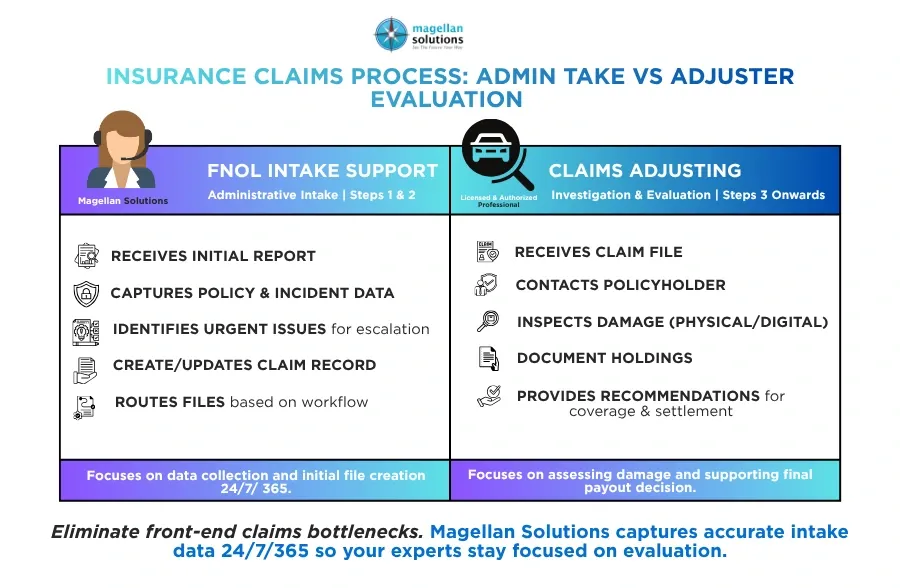
To maintain efficiency and compliance, carriers set a clear operational line: an FNOL support team takes the call, captures key details, and routes the file, while a claims adjuster inspects damage, evaluates coverage, and documents the loss to support the insurer’s settlement decision.
What Is First Notice of Loss?
First Notice of Loss is the initial report a policyholder makes to their insurance company following an accident, injury, or property damage. It is an information-gathering step designed to create an accurate record, not a formal determination of coverage.
While policyholders traditionally reported losses by phone, modern workflows support multiple intake channels:
- Standard phone hotlines
- Online web intake portals
- Mobile applications for direct photo and document uploads
- Chat and digital messaging interfaces
Reporting a loss creates or updates an electronic claim file in the insurer’s system, which supports downstream evaluation.
What Is Claim Intake Outsourcing?
Claim intake outsourcing involves partnering with an external customer service team to manage incoming claim reports and administrative data entry. Delegating these front-end tasks allows carriers to optimize internal resource allocation.
An outsourced intake team’s role is strictly administrative:
- Answering incoming calls and verifying policy information.
- Recording incident details (date, time, location, and description).
- Assisting with initial intake of documents and photos.
- Identifying urgent scenarios—such as severe property damage or safety hazards—and escalating them according to the insurer’s approved escalation workflow.
Intake representatives do not interpret policy contracts, determine coverage applicability, or provide settlement estimates to policyholders.
How the Work Is Divided
| Core Task | FNOL Intake Support | Claims Adjuster |
| Answers Initial Call | Yes. Records reported details. | No. Receives routed file. |
| Records Basic Details | Yes. Captures date, time, and location. | Yes. Verifies and expands on facts. |
| Gathers Scene Photos | Yes. Assists with initial uploads. | Yes. Requests official repair bids. |
| Inspects Physical Damage | No. Operates in a call center/digital workspace. | Yes. Inspects property or vehicle. |
| Evaluates Policy Terms | No. Cannot interpret limits or exclusions. | Yes. Reviews terms, limits, and deductibles. |
| Estimates Loss/Repair Costs | No. Has no valuation authority. | Yes. Prepares damage documentation/estimates. |
| Authorizes Claim Approval or Payment | No | No—retained by the insurer or authorized claims professional |
Where the Claims Adjuster Takes Over
Once the intake team collects initial details and creates the electronic file, the insurer assigns the claim for investigation. The adjuster then evaluates the loss and provides documentation to support the insurer’s settlement decision.
A claims adjuster typically handles:
- Direct Contact: Reaches out to the policyholder to discuss the incident and outline next steps.
- Inspection & Investigation: Evaluates physical or digital evidence of damage.
- Policy Review: Analyzes applicable terms, coverage limits, deductibles, and exclusions.
- Valuation & Documentation: Prepares loss estimates and reviews contractor repair documentation.
- Settlement Support: Submits findings and recommendations to the insurer for final decision-making.
Real-World Example: NFIP Flood Claims
To see this handoff in action, consider FEMA’s National Flood Insurance Program (NFIP). According to FEMA’s flood claim guidance, the policyholder reports the loss to their agent or insurer. The assigned adjuster generally contacts the policyholder within 24 to 48 hours to schedule an inspection, document the loss, and help prepare an estimate.
FEMA’s recovery guidelines note that a standard NFIP claim can take four to eight weeks to finalize and pay. This NFIP-specific example illustrates the transition from loss reporting to adjuster evaluation, though timelines vary across other insurance lines.
Why Accurate Intake Matters
Claim intake is a high-volume operational foundation. According to the NAIC’s analysis of 2024 Market Conduct Annual Statement data, 7,354,437 property-and-casualty claims closed with payment nationwide in 2024.
Claims that close with payment generally start with an initial report of loss, so accurate documentation and routing are vital to downstream workflows. Incomplete contact details, improper file categorization, or unscripted responses can cause administrative delays or compliance risks. Standardized intake helps ensure adjusters receive complete files on day one.
Key Operational Benefits of Intake Outsourcing
Partnering with an external intake provider offers practical support for carrier workflows:
- 24/7 Availability: Provides round-the-clock intake capability without requiring overnight in-house staffing.
- Surge Capacity Support: Helps insurers manage volume fluctuations during major weather events or regional catastrophes.
- Script Compliance: Utilizes approved workflows and software scripts to maintain consistent data collection on every call.
- Multilingual Intake: Offers bilingual capabilities to assist policyholders in their preferred language.
Partnering with Magellan Solutions
Outsourcing routine FNOL data entry to Magellan Solutions can help reduce administrative workload on internal teams. Our FNOL intake support operates under your approved scripts, security requirements, and escalation protocols to capture clean data and route files into your core systems 24/7/365.
Contact us today to evaluate how our scalable intake support can streamline your claims workflow.
Frequently Asked Questions About Claims Intake and Adjusting
1. What does FNOL stand for?
FNOL stands for First Notice of Loss. It is the initial report a policyholder makes to their insurance provider following an incident or property damage.
2. What is claim intake outsourcing?
It is partnering with an external customer service provider (BPO) to manage front-end call handling, record initial incident details, and route claim files to the insurer.
3. Does an FNOL team decide whether a claim is covered?
No. The intake team records only the reported facts. Coverage determinations are made by the insurer or authorized claims personnel following an investigation.
4. What information is gathered during FNOL intake?
Representatives collect basic policy details, contact information, the incident date and location, a description of the event, and preliminary details about damage or injuries.
5. Does a claims adjuster authorize payment checks?
Generally, no. The adjuster inspects damage, reviews coverage terms, and prepares loss documentation. Final claim approval and payment authorization are retained by the insurance carrier or designated authority.
6. When are urgent calls escalated during FNOL?
Calls involving severe safety hazards, major structural damage, or emergency scenarios are immediately escalated according to the insurer’s pre-approved workflow.
7. What security compliance standards should insurers verify before outsourcing?
Insurers should evaluate a partner’s data security controls, including SOC 2 guidelines, HIPAA compliance where health data is present, PCI-DSS compliance for payment details, and carrier-specific security protocols.
Key Takeaways
- Maintain Operational Boundaries: Keep a clear distinction between administrative intake tasks and licensed or regulated adjusting functions.
- Support Adjuster Workflows: Outsourcing FNOL intake can reduce administrative tasks, letting adjusters spend more time investigating and evaluating.
- Ensure Scalable Coverage: A dedicated intake partner provides round-the-clock availability and surge support during high-volume periods.
- Establish Clear Workflows: Integrate intake teams with approved scripts, clear escalation paths, and secure claim management systems.