

In specialty healthcare, patient engagement doesn’t stop when someone leaves the clinic. In many cases, that’s when it becomes even more important.
Patients often need appointment reminders, treatment follow-ups, medication guidance, or updates about ongoing care. When those touchpoints are missed, clinics can face no-shows, delayed treatments, and lower patient satisfaction.
That’s why many providers now outsource patient engagement work to healthcare outbound call center teams. By combining proactive communication with structured workflows, medical outbound services help specialty clinics stay connected with patients long after the initial visit.
Why Patient Engagement Is A Growing Priority
Healthcare organizations have invested heavily in improving patient experiences over the last decade. Yet communication remains one of the most common challenges.
Patients today expect the same level of responsiveness they receive from banks, retailers, and other service providers. If they don’t receive reminders, updates, or timely follow-ups, engagement can quickly decline. For specialty clinics, this creates a unique challenge.
Patients may be managing long-term conditions, attending multiple appointments, or following treatment plans that require ongoing communication. Missing just one important interaction can affect the entire care journey. This is where medical outbound becomes a valuable operational tool.
The Real Cost Of Missed Patient Communication
Most clinics focus on appointment scheduling, but patient communication extends far beyond booking visits.
When communication gaps occur, clinics often experience:
- Missed appointments
- Delayed treatment plans
- Lower patient participation
- Increased administrative follow-up
- Reduced operational efficiency
Many of these issues begin with something simple: a patient who never received a reminder or a follow-up call. Medical outbound helps reduce these risks by creating a structured communication process that keeps patients informed and engaged throughout their care experience.
How Medical Outbound Improves Patient Engagement
The primary goal of medical outbound is proactive communication. Rather than waiting for patients to reach out with questions or concerns, clinics initiate contact at key stages of the patient journey.
Common outreach activities include:
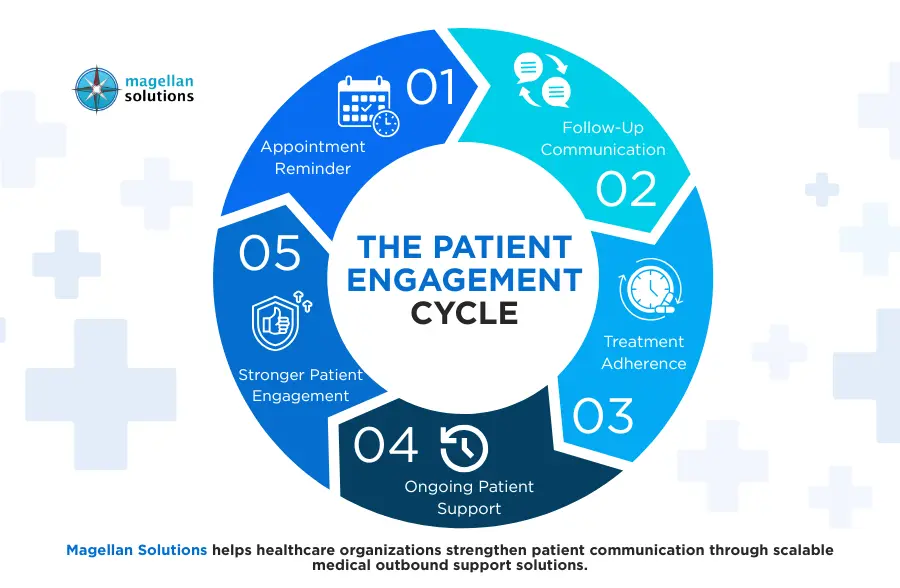
- Appointment reminders
- Follow-up calls after visits
- Treatment plan reminders
- Preventive care outreach
- Scheduling assistance
These touchpoints help patients stay connected to their healthcare providers while reducing communication burdens on clinic staff. More importantly, they help create a better patient experience.
Why Specialty Clinics Need A More Consistent Approach
Specialty healthcare often involves complex patient journeys. Unlike general practice visits, specialty care may require recurring appointments, diagnostic testing, treatment monitoring, and long-term follow-up.
Maintaining communication across all these stages can be difficult without a dedicated process.
According to Zendesk, 72% of customers expect immediate service when they need assistance. While healthcare operates differently from traditional customer service industries, patient expectations around responsiveness continue to increase.
As a result, many clinics are turning to medical outbound programs to create a more reliable communication framework.
Why Specialty Clinics Outsource Patient Engagement
Many specialty clinics operate with limited administrative resources. As patient volumes increase, staff members often find themselves balancing scheduling, documentation, patient inquiries, and follow-up communication simultaneously.
Outsourcing medical outbound services provides additional communication capacity without requiring clinics to continuously expand internal teams.
This approach helps organizations:
- Improve communication consistency
- Reduce administrative workloads
- Extend patient outreach efforts
- Support clinic growth
- Improve operational efficiency
For many clinics, outsourcing isn’t about replacing staff. It’s about giving internal teams more time to focus on patient care.
What You Can Outsource in a Patient Engagement Program
Patient engagement isn’t one service. It’s a set of outreach jobs, each tied to a moment in the patient’s care. These are the ones clinics most often hand to an outsourced team:
- Appointment reminders and confirmations: calls and texts before each visit, with reschedules handled on the same call and same-day follow-up on missed visits. See our medical appointment reminder services.
- Scheduling and recall: booking overdue patients back in for check-ups, screenings and chronic-care visits, and filling open slots.
- Post-discharge and post-visit follow-up: check-in calls that confirm next steps and route any problem back to the care team.
- Preventive and care-gap outreach: contacting patients who are due for a screening or have fallen behind on a care plan.
- Medication adherence calls: scheduled reminders that help patients stay on treatment and refill on time. See our medication reminder services.
- Patient satisfaction surveys: short post-visit calls that collect feedback and flag issues early.
Most clinics start with the job that’s costing them most, often no-shows or an overdue recall list, and add others once the first is running. Calls, texts and email can work together, with every outcome recorded in your EHR/EMR so your team sees the whole picture.
What Stays With Your Clinical Team
An outsourced engagement team reminds, schedules, follows up and records. It doesn’t give clinical advice, interpret symptoms or test results, or change a care plan. Anything clinical goes back to your staff under an escalation protocol agreed before launch, and a patient describing an emergency is told to hang up and call 911.
That line is what makes outsourcing safe. Routine outreach moves off your front desk and nurses’ phones, and every clinical question still reaches someone qualified to answer it.
Questions to Ask a Patient Engagement Outsourcing Partner
- Which outreach jobs do you run, and can we start with one and add others later?
- Will your agents work inside our EHR/EMR, so every outcome is recorded where our staff see it?
- How are calls, texts and email combined, and who decides which patients get a live call?
- What gets escalated to our clinical team, and how fast?
- How is patient information protected?
Better Communication Supports Better Care
Patients who remain informed and engaged are generally more likely to attend appointments, follow treatment recommendations, and maintain ongoing relationships with healthcare providers. While communication alone doesn’t determine outcomes, it plays an important supporting role.
Medical outbound services help clinics create a more reliable communication environment that encourages participation and continuity throughout the care process. Small improvements in communication often lead to meaningful improvements in the overall patient experience.
Scaling Patient Engagement Without Overloading Staff
Growth is a positive sign for any healthcare organization, but it also introduces new operational challenges. More patients mean more appointments, more follow-ups, and more communication responsibilities.
Without structured outreach processes, administrative workloads can quickly become difficult to manage. Medical outbound provides specialty clinics with a scalable way to maintain patient engagement while improving operational efficiency.
Rather than relying solely on internal resources, clinics can build communication systems that can scale with patient demand.
Why Medical Outbound Continues To Matter
Patient expectations continue to evolve. People want clear communication, timely reminders, and easier access to information throughout their healthcare journey.
For specialty clinics, meeting those expectations requires more than occasional follow-up calls. It requires a consistent communication strategy.
Medical outbound helps healthcare organizations strengthen patient relationships, improve engagement, and support smoother care coordination across every stage of the patient journey.
Magellan Solutions has provided outsourced contact center services since 2005. Our healthcare-trained agents run reminders, scheduling and recall, post-discharge follow-up, preventive outreach, adherence calls and surveys for specialty clinics, physician groups and other healthcare organizations, working inside your systems. Delivery from the Philippines typically runs 40–60% below the cost of onshore staffing, and most programs go live in 4–6 weeks. Magellan holds ISO 27001 and PCI-DSS certification, with HIPAA-aligned processes under signed Business Associate Agreements (US) and Australian Privacy Principles compliance (Australia).
If your organization is looking to strengthen patient communication and improve engagement outcomes, speak with our specialists to explore tailored medical outbound solutions designed for growing healthcare operations.