


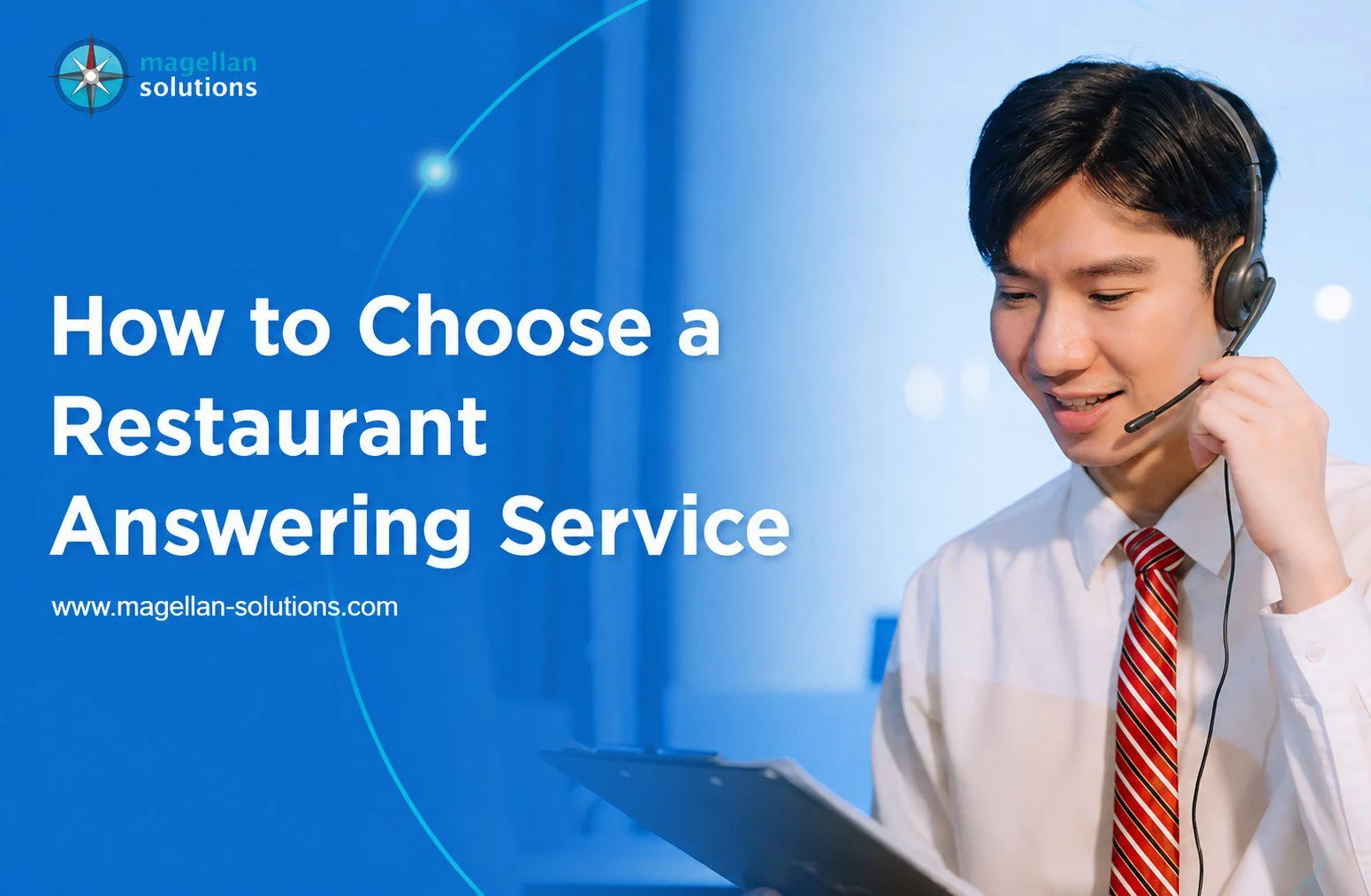
You know that feeling when the phone rings in the middle of the dinner rush? It’s enough to make any restaurant owner break a sweat.
Most restaurants looking at a restaurant answering service are solving one of four different problems — and the four need different things from a provider. Overflow at seven on a Friday is not the same problem as an unanswered phone at eleven at night, which is not the same problem as a fifth of your covers not turning up.
This guide covers how to tell which one you actually have, what an answering service will and won’t fix, and what to ask before you sign anything.
Why restaurant calls go unanswered
Before comparing providers, it helps to be precise about what is going wrong.
Missed opportunities. Customers call to book, ask about the menu, or check your hours. When the phone rings out, you lose the booking or you frustrate someone who was ready to spend.
Staff distraction. During service, whoever answers the phone stops serving the people already in the room. The cost is paid twice — once on the call, once at the table.
Lost leads. Catering and large-party enquiries need time and attention your front of house does not have at seven o’clock. These are also your highest-value calls, which is what makes missing them expensive rather than merely annoying.
Which problem are you actually solving
Four patterns, four different answers.
Your phone rings out during service. The calls are coming at exactly the moment nobody can take them. You need overflow cover — a team that picks up when your line is engaged or unanswered, takes the booking, and puts it into your system. This is reservation and waitlist coverage, and it is the most common starting point.
Your phone rings out when you’re closed. People book at ten at night for next Saturday. If nobody answers and there is no callback, they book somewhere else. This is after-hours answering, and it is a different shift pattern and a different brief from overflow — worth separating when you scope it.
People book and don’t show. Your phone is being answered fine. The problem is downstream: no confirmation call, no card guarantee, no reminder. Answering more calls will not fix this. What fixes it is confirmation and no-show prevention, which is a proactive outbound job rather than an inbound one.
Takeout and delivery volume is drowning the line. Order-taking is a different skill from booking a table — it needs menu fluency, upsell prompts, and accuracy under time pressure, and it has its own error costs. If this is the bulk of your call volume, look at takeout and delivery order taking rather than a general answering service.
If more than one of these is true, name the one costing you the most money and scope for that first. Providers will happily sell you all four, and a brief that tries to solve everything at once tends to be trained badly for each.
What an answering service won’t fix
Worth saying plainly, because it is where these arrangements usually disappoint.
They cannot see your floor. An outsourced team works from your seating rules, not from looking at the room. If your host makes judgement calls about squeezing in a table or holding one back, that judgement has to be written down as a rule before anyone else can apply it. Most restaurants have never written it down, and that — not the provider — is what makes the first month bumpy.
They cannot judge a walk-in queue. Anything requiring a live read of how long the current sitting will run stays with your staff.
They will not fix a bad booking system. If your reservation platform is the bottleneck, adding people in front of it moves the queue without shortening it.
They will not sound like your restaurant on day one. Tone, menu knowledge and the questions worth asking take a few weeks of correction. Anyone promising a seamless handover from the first shift is describing a sales cycle, not an onboarding.
None of this is an argument against outsourcing. It is an argument for knowing what you are buying, and for treating the first month as training rather than as the finished service.
How to judge a provider
Restaurant experience specifically. Not “hospitality.” Ask what they do when a party of six wants a table at 7:30 on a Saturday that you would normally hold. The answer tells you whether they have run restaurant lines before.
Willingness to work to your rules. Every restaurant seats differently. A provider that arrives with a fixed script and no interest in your seating policy will produce bookings you have to unpick.
Integration with what you already use. They should work inside your reservation platform and your POS, not alongside them in a separate spreadsheet you reconcile later. Ask specifically what happens when that platform goes down — a provider who has never thought about it has never run a busy line.
Reporting you would actually read. Call volumes by hour, missed-call rate, conversion from enquiry to booking. Enough to tell you whether it is working and where to staff.
A written escalation rule. What happens when a caller is angry, or the request is outside the script. This is the most-skipped question in the process and the one that produces the worst incidents.
Common objections
“It’s cheaper to give the shifts to a part-timer.” For a single site with predictable volume, sometimes true. The comparison changes when the calls cluster at exactly the hours your floor is busiest, or spread across hours you are closed — that is where a part-timer becomes two part-timers.
“Will guests be able to tell?” Some will. What determines whether they mind is competence, not accent or location: whether the person knew the menu, held the right table, and got the booking right. Guests forgive an unfamiliar voice. They do not forgive arriving to no table.
“We’re one location. Is this overkill?” Single sites are common with overflow and after-hours cover, which are the two cheapest places to start. Multi-location groups tend to need more, because their call volume is spread across sites and their reporting problem is harder.
Where to start
Work out which of the four problems is costing you most, write down your seating and hold rules before anyone else touches the phone, and scope for that one problem first.
When you are ready to compare what that looks like in practice — capabilities, coverage hours, and how it integrates with your reservation platform — the restaurant reservation and answering service page has the detail.