

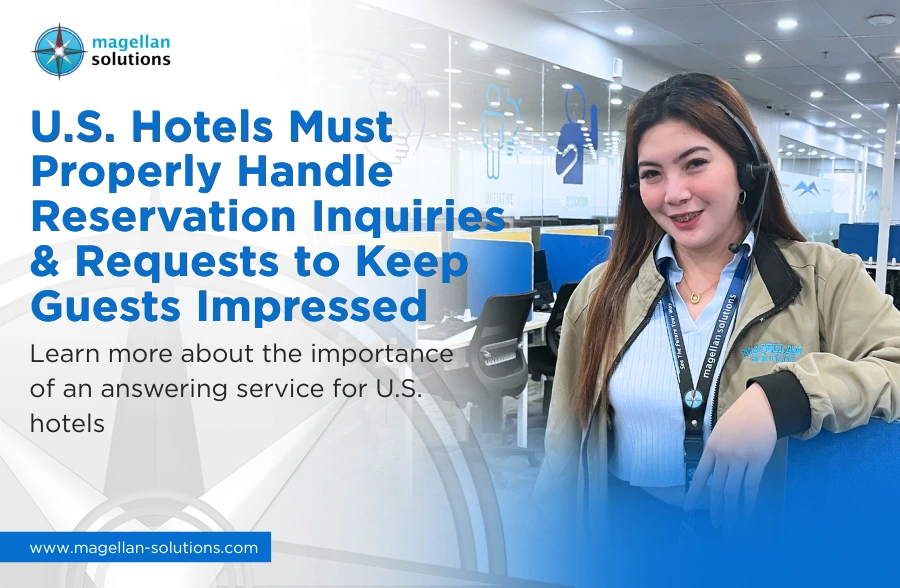
Two hotels can buy the same answering service and need completely different things from it. A forty-room independent wants the phone covered when one person is holding the desk alone. A motel wants somebody awake at 2am. A franchise property wants the greeting to match a brand standard it gets audited on.
The service is the same. What the agents are briefed to do is not. This is what an answering service for hotels actually covers, and what changes depending on the kind of property you run.
What an answering service for hotels does
An answering service puts a live person on your line when your own team can’t be on it. Agents work from a call guide you write and approve — your room types, rates, what’s included, parking, pet and cancellation policy, arrival and departure times, how to find you, and who to reach when a caller needs someone on site.
Inside that guide, they act. Availability and rate questions get answered. Where you give system access, a booking is taken on the call rather than written down and passed back. Outside the guide, they document the request in full and route it to whoever you’ve nominated, rather than guessing at an answer your guest will hold you to.
It’s a shared team, covering several properties, briefed on yours. That’s what makes it affordable at the size most independent hotels need it, and it’s the honest trade — broad coverage and standard handling rather than dedicated headcount.
Independent hotels
A single property with no reservations department has one structural problem: the person answering the phone is the same person checking guests in, taking complaints, and carrying a bag to room 12. Calls don’t arrive in the gaps.
The coverage that matters is the coverage where the desk is thinnest — the check-in rush between four and six, the single-cover evening shift, and the overnight hours nobody is rostered for at all. An independent hotel usually doesn’t need its phone answered all day. It needs it answered in the twelve hours a week when answering it is impossible.
What the agent needs in front of them is narrow: current availability, your rates and what they include, and your escalation contact for anything that needs a decision.
Boutique hotels
Guests choose a boutique property partly for how it deals with them, and a phone call is the first test of that. A generic greeting undoes some of what your positioning is doing.
So the brief is different in kind rather than in scope. Agents work from your own wording — how you answer, how you describe the rooms, what you call things — rather than a standard hospitality script. The escalation threshold is usually lower too: a boutique operator generally wants to handle special requests personally rather than have them answered adequately by someone else.
The reservation questions are also longer. Boutique guests ask about specific rooms, views, quiet floors and whether the restaurant takes non-residents. That means the call guide carries more detail per room than a larger property’s would.
Motels
Motel calls skew late, and they skew toward availability. “Do you have anything tonight” arrives at nine in the evening from someone who is driving, and the answer needs to be immediate and correct — they are calling three properties, not one.
Directions matter more here than anywhere else. A caller on a highway wants to know which exit, which side, and whether reception is staffed when they arrive. That’s call-guide content, and it’s the content most often missing.
The overnight window is the whole job. A motel that covers its own phone from seven in the morning to nine at night and outsources the rest is buying exactly what it needs and nothing it doesn’t.
Franchise and branded properties
Brand standards specify how the phone is answered, and franchise properties get measured against them. That turns the answering service into a compliance question as much as a coverage one.
Agents follow the brand’s script and escalation rules as written, including the greeting, the required disclosures and the sequence a reservation call is meant to follow. The property gets the standard met without funding a dedicated phone shift to meet it.
The practical constraint is the reservation system. Franchise properties usually book through a brand CRS with its own rules about who can do what. Establish what access an agent gets, and which changes need to go back to the property, before onboarding rather than after.
Multi-property groups and management companies
Operators running several properties have the opposite problem to an independent: not thin coverage, but inconsistency. The same inquiry gets handled three different ways at three properties, and nobody sees it happening.
One briefed team answering for all of them fixes that, provided the setup is per-property rather than generic. Each property needs its own call guide, its own rates and its own escalation list, and the agent opens the right one from the number the caller dialled. Where groups get poor results from an answering service, it’s almost always because the properties were set up as one account with one script.
Reporting matters more at this size too. Call volume by property, by hour, and by outcome is how a group works out where its phone problem actually is.
What to ask before you sign
Five questions separate providers that will work from providers that will sound fine on a sales call.
Who writes the call guide, and how long does it take? The answer should involve your information and a defined onboarding period, not a template you approve.
What can an agent do in my reservation system, and what needs to come back to me? Get the boundary in writing, per booking type.
What happens to a call the guide doesn’t cover? “We’d figure it out” is the wrong answer. “We document it and route it to your named contact” is the right one.
Is the team shared, and how many properties does it cover? A shared team is normal at this price point. A provider that won’t say so is worth less trust than one that will.
How is it priced? Per call, per minute and banded monthly behave very differently once your volume moves with the season. Ask which one, and ask what happens in your busiest month.
Where to go next
If your property fits one of the patterns above, the next step is a scope and a number. See how a shared answering team is scoped and priced — which calls agents handle, what stays with your front desk, and what a quote is based on.
Properties running a full reservations operation, where the line carries real booking volume and enough of it turns on judgment about rate plans and group contracts, usually want something more than a shared team. That’s hotel contact center outsourcing — agents assigned to your property alone, trained through incubation, with supervisors behind them.
For properties outside hotels — inns, vacation rentals, restaurants, travel agencies — the same coverage runs through our hospitality answering service.