

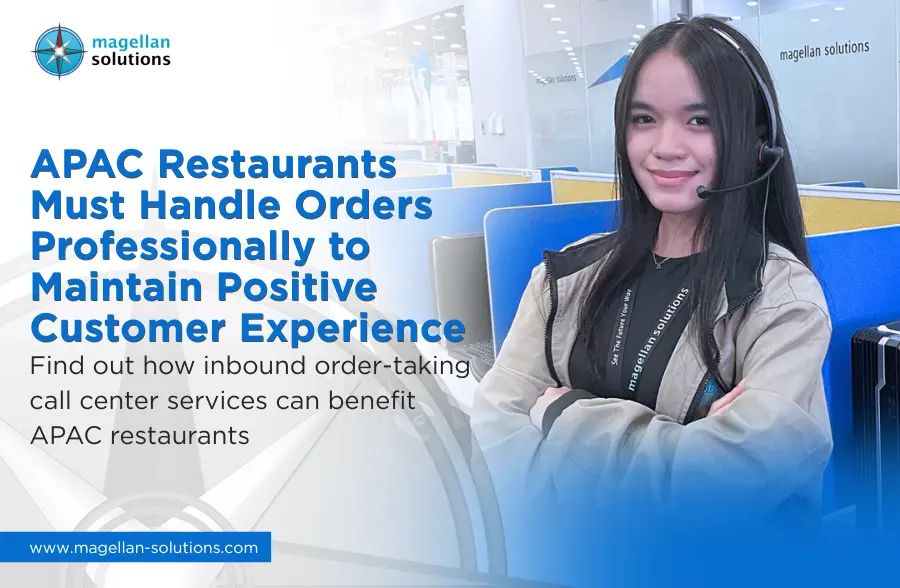
Manila is UTC+8. For a restaurant in Sydney, Auckland or Singapore, that puts your dinner service inside a Philippine day shift rather than an overnight one.
That is the difference between outsourced order taking in this region and the same service sold into North America or Europe, and it is worth knowing before you compare quotes.
The time zone is most of the argument
Manila does not observe daylight saving, so from the Philippine side these hold year-round.
| Your market | Manila 9am–6pm reaches you at |
|---|---|
| Perth, Singapore, Kuala Lumpur | 9am – 6pm |
| Tokyo, Seoul | 10am – 7pm |
| Sydney, Melbourne (AEST) | 11am – 8pm |
| Sydney, Melbourne (AEDT, Oct–Apr) | 12pm – 9pm |
| Auckland | 1pm – 10pm |
Read the bottom rows. An Australian or New Zealand dinner service is covered by a Manila team working ordinary daytime hours.
This is not a small operational detail. Overnight shifts are harder to recruit for and harder to retain staff on, and they cost more per seat. A team working your evening on their afternoon is more stable and less expensive than the same team working your evening on their 3am. When people say offshore quality varies, shift pattern is a large part of what they are describing.
It also means escalation works. If something goes wrong with an order at 7pm in Melbourne, the supervisor who can fix it is at their desk, not asleep.
What order taking for a restaurant actually involves
Worth being concrete, because “order taking” sounds simpler than it is.
Menu fluency under time pressure. An agent needs to know what comes with the laksa, what can be made without dairy, and what is off tonight. This is learned, and it takes longer than most providers imply.
Modifiers and allergens. The single highest-cost error in restaurant order taking is a mishandled allergy. Any provider you consider should be able to tell you their allergen protocol without going away to check.
Upsell without pressure. Drinks, sides, the second dessert. Done badly it costs you the customer; done well it is most of the commercial case for outsourcing at all.
Compression. Order volume is not spread across the day. It arrives in two spikes, and your provider needs enough seats staffed in those windows specifically — which is what “team-based” actually means when a provider says it.
Accuracy under accent and line noise. Confirmation practice matters more than anything else here. Ask how orders are read back.
Where language matters, and where it doesn’t
Across much of the region, English is the working language of the restaurant trade — Australia, New Zealand, Singapore, Hong Kong, and much of urban Malaysia and the Philippines. If those are your markets, language is not your constraint and you should be assessing on menu training and shift coverage instead.
Where it does matter, it matters completely. A customer ordering dinner will not switch languages to do it.
- Indonesia and Malaysia — Bahasa order taking and booking
- Japan — Japanese-language support
- Korea — Korean-language support
- Thailand — Thai-language support
One caution worth more than it sounds: a bilingual agent is not the same as an agent who can take a food order in that language. Menu vocabulary, dish names and modifier terms are specialist. Ask to hear a recorded call in the language you need, taking an order, not a general enquiry.
What to check before you outsource order taking
- Which shift will actually cover my service? Get the answer in your local time, in writing. This is the question the rest of the arrangement rests on.
- How many seats in my peak window? Not headcount on the account — seats staffed between 6pm and 9pm your time.
- What is the allergen protocol?
- How do orders reach my kitchen? Direct into your POS, or typed into something someone has to re-key? Re-keying is where the errors are.
- What happens when the POS goes down?
- Who trains them on menu changes, and how fast? Specials change daily in many venues. If the update loop is weekly, the service will be wrong most of the time.
Common questions
“Is this only worth it for chains?” Multi-site groups have the clearest case, because their volume justifies dedicated seats. Single venues more often start with overflow or after-hours coverage rather than full order taking.
“Won’t customers know they’re not talking to the restaurant?” Some will. What determines whether they mind is whether the order was right. Accuracy buys forgiveness for an unfamiliar voice; an unfamiliar voice never gets forgiven for a wrong order.
“We mostly take orders through apps now.” Then phone order taking may be the wrong service and reservation and booking coverage may be the right one. Worth being honest about where your call volume actually goes before scoping either.
Where to start
Work out how many calls arrive in your two peak hours, and how many you currently miss in those hours. That number is the business case, and it is the only one that matters at this stage.
When you want to see what coverage looks like in practice — seats, hours, and how orders reach your kitchen — the order-taking services page has the detail.