
The healthcare industry is under constant pressure to do more with less. With rising administrative workloads, complex billing systems, and increasing patient expectations, many medical facilities are finding it difficult to maintain both care quality and operational efficiency.
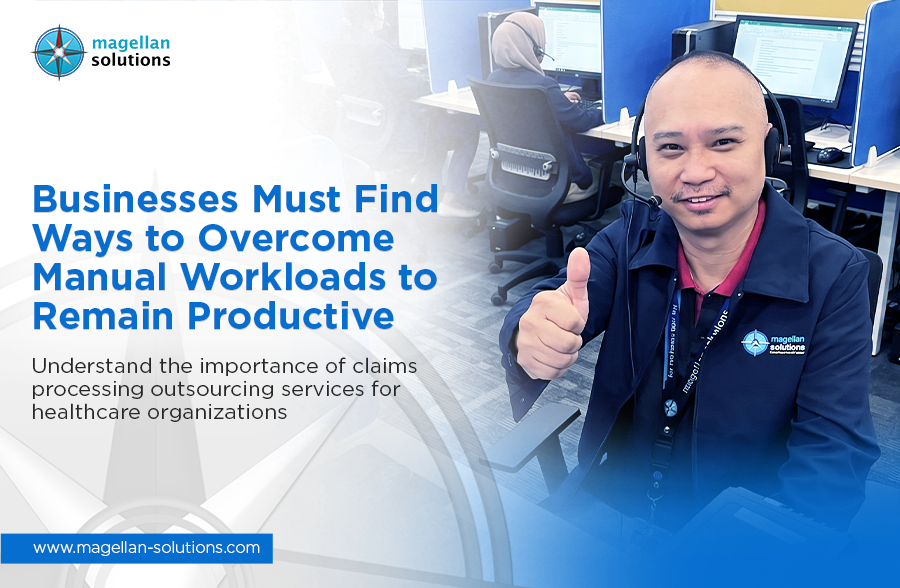
From large hospital networks to private practices, providers are seeking ways to reduce costs while maintaining compliance and accuracy. That’s where outsource healthcare services comes in — offering a strategic way to streamline operations without compromising patient care.
Outsourcing has quickly evolved from a cost-saving measure into a vital operational strategy. It enables healthcare organizations to focus on clinical excellence while delegating time-consuming but essential functions — such as medical billing, claims processing, transcription, and scheduling — to reliable third-party partners.
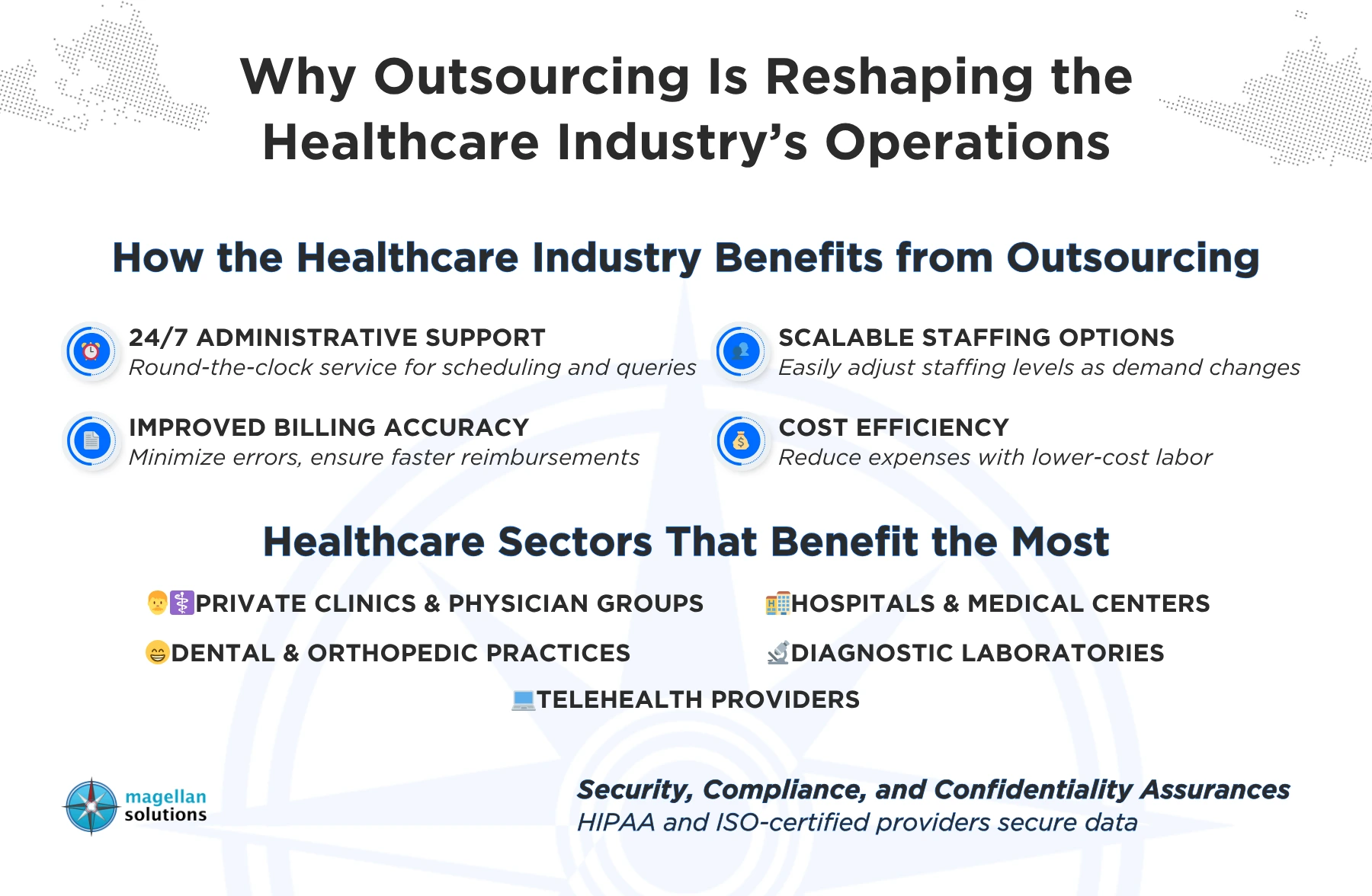
How the Healthcare Industry Benefits from Outsourcing
Healthcare providers now recognize that administrative efficiency directly impacts patient satisfaction and revenue. By partnering with a trusted outsourcing provider, medical institutions can achieve measurable improvements in workflow, cost, and service quality.
Here’s how outsourcing healthcare services helps:
1. Cost Efficiency
Outsourcing reduces the financial burden of hiring, training, and retaining in-house administrative staff. Service providers operate from lower-cost regions, allowing hospitals and clinics to save up to 60% in labor expenses while maintaining high-quality performance.
2. Improved Billing Accuracy
With medical billing and coding specialists handling claims, healthcare organizations minimize rejections and ensure faster reimbursements. This accuracy also reduces financial losses caused by manual entry errors and delayed processing.
3. 24/7 Administrative Support
Healthcare facilities don’t rest — and neither should their operations. Offshore teams offer round-the-clock services for appointment scheduling, patient queries, and insurance verification, ensuring seamless continuity even beyond local office hours.
4. Scalable Staffing Options
Whether managing seasonal demand or scaling up after expansion, outsourcing offers flexible staffing solutions. Providers can easily add or reduce team members based on patient volume without long-term HR commitments.
5. Access to Specialized Expertise
Outsourcing partners employ professionals trained in medical transcription, revenue cycle management (RCM), and EHR data entry. Their deep industry knowledge helps maintain compliance with healthcare regulations like HIPAA and ISO standards.
6. Enhanced Focus on Patient Care
By shifting back-office tasks to external experts, doctors and nurses can focus on what truly matters — patient outcomes. This operational clarity leads to higher satisfaction rates and improved overall service quality.
Healthcare Sectors That Benefit the Most
Outsourcing solutions cater to various healthcare disciplines and support services. Some of the key areas that gain the most from this model include:
-
Hospitals and Medical Centers – Manage high patient volumes while optimizing billing, insurance processing, and data management.
-
Private Clinics and Physician Groups – Streamline appointment scheduling, patient communication, and transcription.
-
Diagnostic Laboratories – Outsource report documentation, test result entry, and client coordination.
-
Dental and Orthopedic Practices – Simplify insurance claims, patient follow-ups, and record-keeping.
-
Telehealth Providers – Enhance patient engagement with 24/7 virtual support, appointment reminders, and backend operations.
-
Medical Equipment Suppliers – Manage order processing, billing inquiries, and customer service efficiently.
Each of these sectors benefits from the cost savings, scalability, and compliance support that outsourcing provides.
Security, Compliance, and Confidentiality Assurances
When it comes to healthcare outsourcing, data security is non-negotiable. Trusted service providers maintain strict adherence to HIPAA regulations, ISO 27001 standards, and GDPR compliance for international operations.
Magellan Solutions, for instance, enforces Non-Disclosure Agreements (NDAs) with all employees and uses secure access control systems to safeguard sensitive patient information. Regular audits, encryption protocols, and restricted data access further ensure that every piece of medical information remains confidential and compliant.
Real Results: Operational Efficiency in Action
Consider a mid-sized healthcare provider in California struggling with delayed billing cycles and overworked administrative staff. By outsourcing their medical billing and claims processing, they achieved:
-
40% faster claim turnaround time
-
30% reduction in administrative costs
-
Fewer billing rejections and denials
-
Improved patient satisfaction scores
Within six months, the provider redirected internal staff to patient engagement initiatives — proving that outsourcing not only saves money but also strengthens the core mission of care delivery.
In-House vs. Outsourced Support
| Factor | In-House Staff | Outsourced Healthcare Services |
|---|---|---|
| Cost | Higher due to salaries, benefits, and overhead | Lower operational costs with scalable plans |
| Training Time | Requires constant upskilling | Handled by trained professionals |
| Availability | Limited to office hours | 24/7 support coverage |
| Scalability | Fixed capacity | Easily scalable based on workload |
| Technology Access | Depends on internal resources | Advanced tools and secure cloud systems included |
Why Choose Magellan Solutions for Outsourced Healthcare Services?
1. Proven Healthcare Expertise
Magellan Solutions has over 18 years of experience providing back-office and support services to healthcare organizations worldwide, from clinics to enterprise-level hospitals.
2. HIPAA-Compliant Operations
Every workflow complies with HIPAA and ISO 27001 standards, ensuring total confidentiality and data protection.
3. Skilled and Certified Professionals
Their team includes certified medical billing specialists, transcriptionists, and administrative support staff trained to meet global healthcare standards.
4. Advanced Technology Integration
Magellan leverages secure EHR systems, AI-driven tools, and encrypted communication channels to ensure smooth data exchange.
5. Scalable and Flexible Solutions
From small practices to growing networks, Magellan offers adaptable support tailored to evolving business needs.
The Bottom Line
The healthcare industry is evolving rapidly — and those that embrace outsourcing are better positioned to keep up with patient demands, regulatory requirements, and financial pressures.
By delegating non-core functions to trusted experts like Magellan Solutions, healthcare providers can achieve operational efficiency while staying focused on delivering exceptional patient care.
Interested in Outsourcing Healthcare Services?
Magellan Solutions offers HIPAA-compliant, cost-effective support designed to meet the complex needs of modern healthcare providers.
Visit www.magellan-solutions.com to learn more or book a free consultation today.