


Companies need access to high-potential prospects to improve their chances of closing deals. Unfortunately, many companies struggle to find high-potential prospects, so their sales representatives waste time on dead-end calls. The good news is that outsourced appointment-setting can help companies secure high-potential prospects. As a result, companies should use qualified lead appointment-setting to close deals consistently.
An Overview of a Qualified Appointment
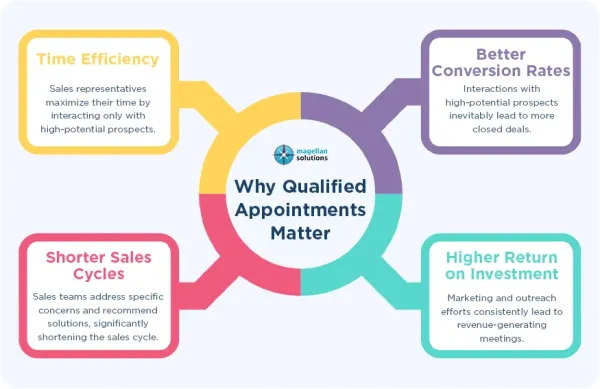
A qualified appointment is a scheduled meeting with high-potential prospects who passed the vetting process. These high-potential prospects are strongly considering buying the product or service. Thus, a qualified appointment ensures sales teams interact only with high-value leads who can generate substantial revenue.
*All infographics created by Nicole Baleros
Show Rate vs. Booked Rate
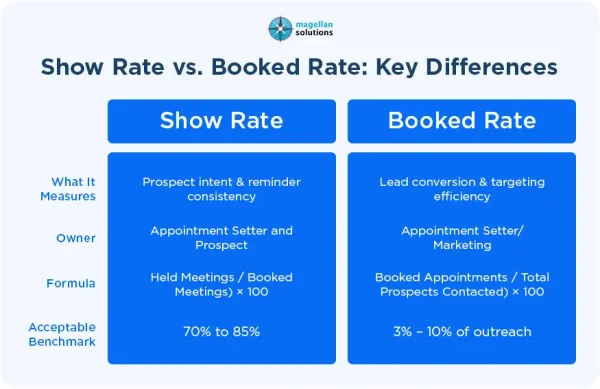
A qualified appointment’s show rate measures the percentage of scheduled meetings that happen. The show rate represents the percentage of booked meetings where the prospects show up. The formula for show rate is: (Held Meetings / Booked Meetings) × 100. The acceptable benchmark for show rate is around 70% to 85% for qualified appointments in outsourced appointment-setting.
The booked rate measures the percentage of targeted prospects who successfully secure an appointment. The formula for booked rate is (Booked Appointments / Total Prospects Contacted) × 100. The acceptable benchmark for booked rate is around 3% to 10% depending on inbound vs. outbound channels.
What Counts as a Qualified Appointment?
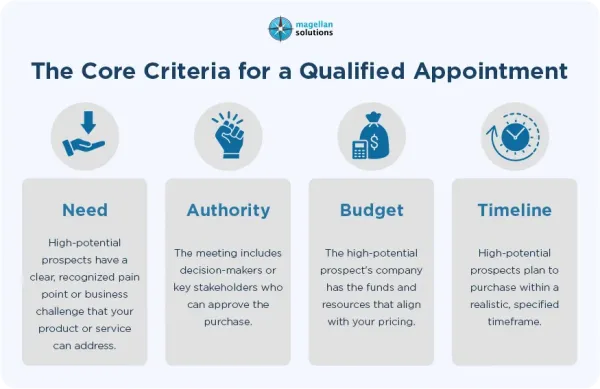
Standard appointments involve random people who are ready to answer a phone call. Qualified appointments in outsourced appointment-setting involve people who fit your ideal customer profile, leading to higher conversion rates.
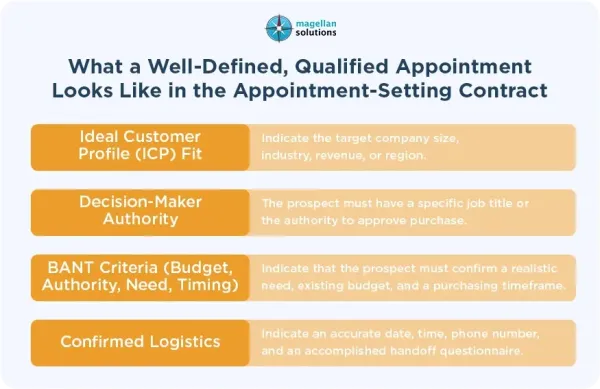
Writing the Definition of Qualified Appointment in the Appointment-Setting Contract
Writing an accurate definition of a qualified appointment in the appointment-setting contract prevents disputes and secures crucial meetings. Thus, a well-defined qualified appointment in the contract protects the business and the appointment-setter.
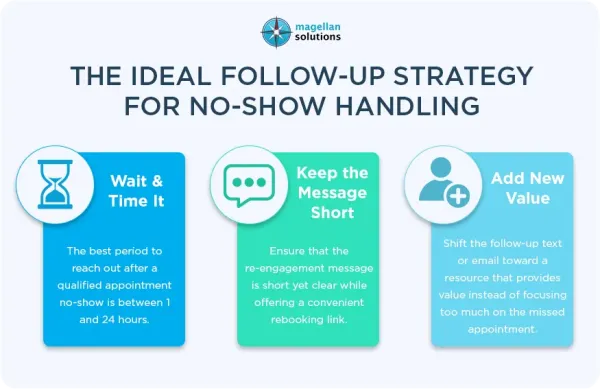
No-Show Handling in Outsourced Appointment-Setting
The effective way to handle a qualified appointment no-show involves sending a brief re-engagement message within 24 hours. Also, adjust confirmation and replacement workflows as needed.
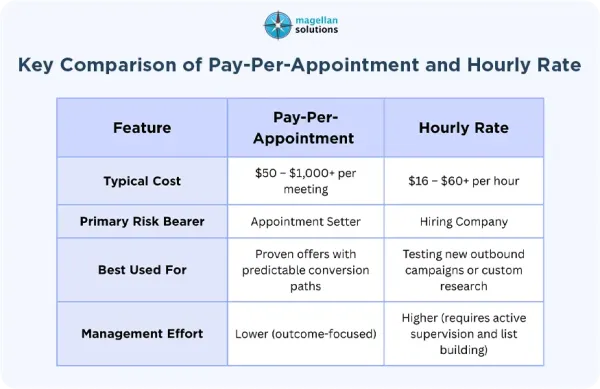
Pay-Per-Appointment vs. Hourly Rate Trade-Offs
Pay-per-appointment involves paying a fixed fee once the prospect meets the qualification criteria and books a meeting. An hourly rate, by contrast, means paying a set hourly wage for execution time and outreach calls, regardless of how many meetings are booked.
Choosing between pay-per-appointment and hourly compensation in outsourced appointment-setting involves a trade-off between financial risk and operational control. Pay-per-appointment moves the risk to the appointment-setter. Hourly models, by contrast, put pressure on the hiring company to maintain campaign efficiency.
Key Takeaways about Outsourced Appointment-Setting
Outsourced appointment setting is now available to help companies secure high-potential prospects. Qualified appointments involve people who match your ideal customer profile, leading to higher conversion rates. Clearly defining a qualified appointment in the appointment-setting contract prevents disputes and secures crucial meetings.
Interested in Outsourced Appointment-Setting Services?
Magellan Solutions provides inbound and outbound call center services and business process outsourcing in the Philippines. We have extensive experience providing best-in-class outsourced solutions to small and medium-sized enterprises (SMEs) and large global enterprises. We are a generalist BPO company that applies a process-improvement mindset to our clients’ outsourcing processes.